

September 2026
Multimodal AI: When Machines Learn to See, Hear and Understand
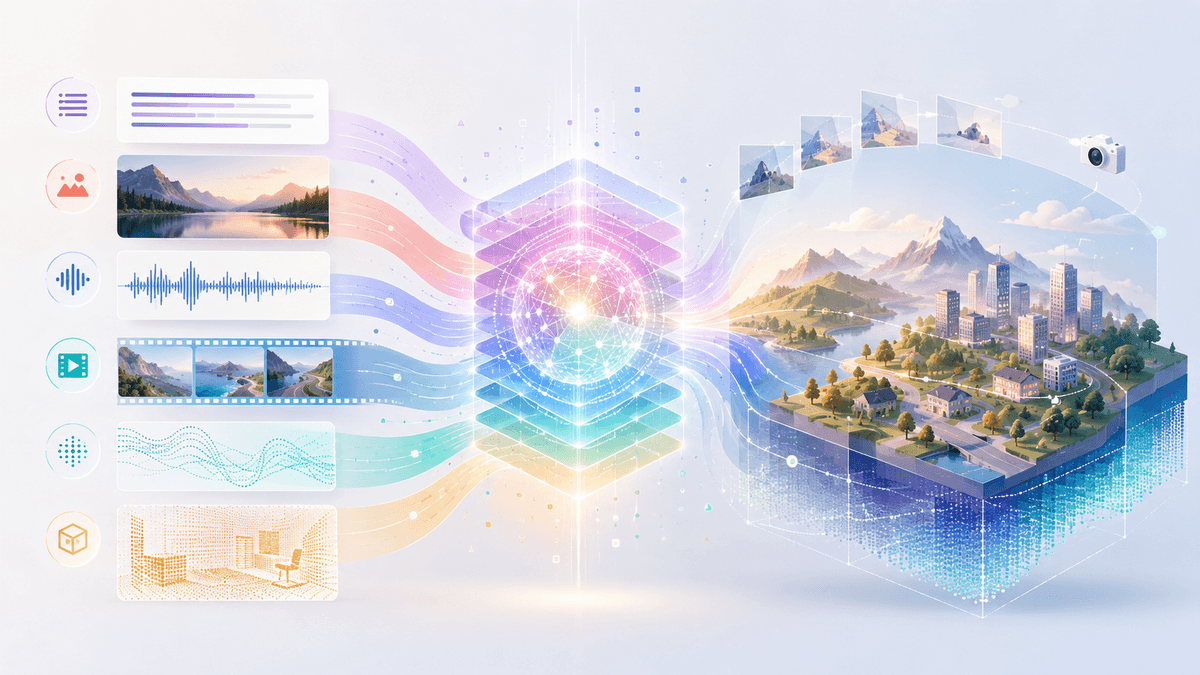
A multimodal model is an artificial intelligence system that can work with more than one kind of information. Instead of understanding only written words, it may also understand images, speech, music, video, diagrams, sensor readings or even three-dimensional spaces.
The word “mode” simply means a form of information. Text is one mode, sound is another and an image is a third. A model that can connect several of these modes is called multimodal.
This is much closer to how people understand the world. If someone shows us a photograph and asks a question about it, we naturally combine what we see with what we hear. If we are driving, we read road signs, watch other vehicles, listen for horns and judge distances, all at the same time.
Earlier AI systems were built for one specific task. One model recognised images, another converted speech into text and a third answered written questions. Multimodal models bring several of these abilities together.
Why multimodal AI matters
Much of the world’s information is not stored in neat blocks of text. It is found in photographs, videos, conversations, handwritten notes, charts, medical scans, security-camera footage and physical spaces.
A conventional language model can read a report about a factory. A multimodal model may be able to read the report, examine photographs from the factory floor, analyse a video of the production line and listen to the sound of a motor.
This gives AI a richer understanding of the situation.
It is important, however, to understand that not every multimodal model has the same abilities. Some can accept images and text but produce only written answers. Others can also create images, speech, music or video. A newer class of systems, known as world models, goes further by trying to understand space, movement and how the physical world changes over time.
Where multimodal models are being used
One of the most familiar applications is the AI assistant. Instead of typing every question, a person can speak naturally, share their screen or point a camera at an object. The assistant can respond using the combined context.
In education, a student can photograph a mathematics problem and ask for a spoken explanation. A child learning science could show the model a plant and ask what it is. A teacher could upload a diagram, a chapter and a recorded lecture, and ask the AI to prepare a simpler lesson.
Multimodal AI makes technology more accessible. It can describe a scene for a visually impaired person, convert speech into text for someone with hearing difficulties or explain a complex document in simpler language.
Healthcare offers another important set of possibilities. They study medical images together with a patient’s history, test results and doctor’s notes. This helps medical professionals understand symptoms and fast track treatment.
In agriculture, a farmer uploads a photograph of a damaged leaf and describes the recent weather conditions in their own language. The model helps identify possible causes and suggests what the farmer should investigate. Future systems may combine satellite images, soil information, weather data and field photographs to provide more localised advice.
Factories are using multimodal systems to examine video, equipment sounds, temperature readings and maintenance records. A change in the sound of a motor, combined with an unusual heat pattern, may provide an early warning of failure.
Retailers and banks are now widely using these models to process forms, invoices, receipts, photographs and customer conversations. Media and design move from a written idea to images, storyboards, narration and video. Robots and autonomous machines combine camera images, depth information, instructions and sensor readings to understand their surroundings.
Some important multimodal models
Several leading AI systems illustrate how quickly this field is developing.
OpenAI’s GPT models can work with text and images, while related realtime and audio models support spoken interactions. This makes it possible to ask questions about a photograph, analyse a chart or hold a voice conversation with an AI system.
Google’s Gemini family was designed around multimodal understanding. Gemini 3.1 Pro, for example, can work with text, images, audio, video and code. This allows a user to ask questions about a recorded meeting, study a video or connect visual information with written instructions.
Anthropic’s Claude models can analyse photographs, charts, screenshots, technical diagrams and PDF documents. A business user could upload a report containing text, tables and graphs and ask the model to explain the complete picture rather than treating each element separately.
These models differ in their design and purpose. Some are general assistants, some specialise in documents and visual analysis, and others are built for research, creation or physical-world applications.
Atlas and the rise of world models
One of the latest and most interesting developments is Atlas, introduced by World Labs on September 1, 2026.
World Labs describes Atlas as an “omni” world model for spatial intelligence. It has been trained to work natively with text, images, video and 3D information. Rather than simply recognising what is present in an image, Atlas tries to understand how the objects and spaces fit together.
This is an important difference.
If an ordinary image model is shown a photograph of a room, it may identify the furniture and describe the décor. Atlas attempts to build an understanding of the room as a three-dimensional space. It can then generate views from new camera positions—even positions that were not present in the original photograph.
Atlas can also work with time as well as space. It can take recordings from a few ordinary cameras and recreate a scene from different angles. This could allow filmmakers to produce “bullet-time” effects without a large and expensive camera setup.
Limitations of Multimodal Models
Multimodal models can appear more intelligent because they work with richer information. But they can make mistakes.
A model may misunderstand a blurry photograph, miss an important moment in a long video or confidently invent a detail that was never present. Combining more forms of information does not automatically make every answer correct.
Privacy is another concern. Photographs, voices, medical records and videos can contain deeply personal information. Organisations need clear rules about what may be uploaded, where it is processed and how long it is retained.
Bias can also enter through images, accents, languages and cultural assumptions. A model trained mainly on data from certain countries or communities may perform less reliably elsewhere. This is particularly important in a diverse country like India, where language, pronunciation, clothing, surroundings and working conditions can vary enormously.
Cost and speed matter as well. Processing long videos, high-resolution images and 3D environments requires much more computing power than processing a short piece of text.
A more natural way to work with machines
The shift from language models to multimodal models is changing the way people interact with AI. We no longer have to translate everything into written instructions before a machine can help us. We can show it the problem, speak about it, share a document or let it examine a video.
The future of AI may therefore be less about sitting in front of a blank chat box. We may simply look, point, speak and act—with AI understanding the different signals together.
That is the real promise of multimodal models. Machines that interact with information in a way that is more complete, more useful and, in some ways, more human.
